
Regina Climate Equity Dialogue 2024
On August 24, 2024, 20 people from diverse organizations and four table facilitators held a climate justice dialogue in Regina. Most attendees were equity-seeking. The four-hour dialogue reflected on issues and values important to attendees, and then examined how economic, social and climate issues intersect in Regina. The themes that emerged were:
- Addressing affordability and accessibility
- A lack of government accountability
- The need to recognize Indigenous knowledge and rights.
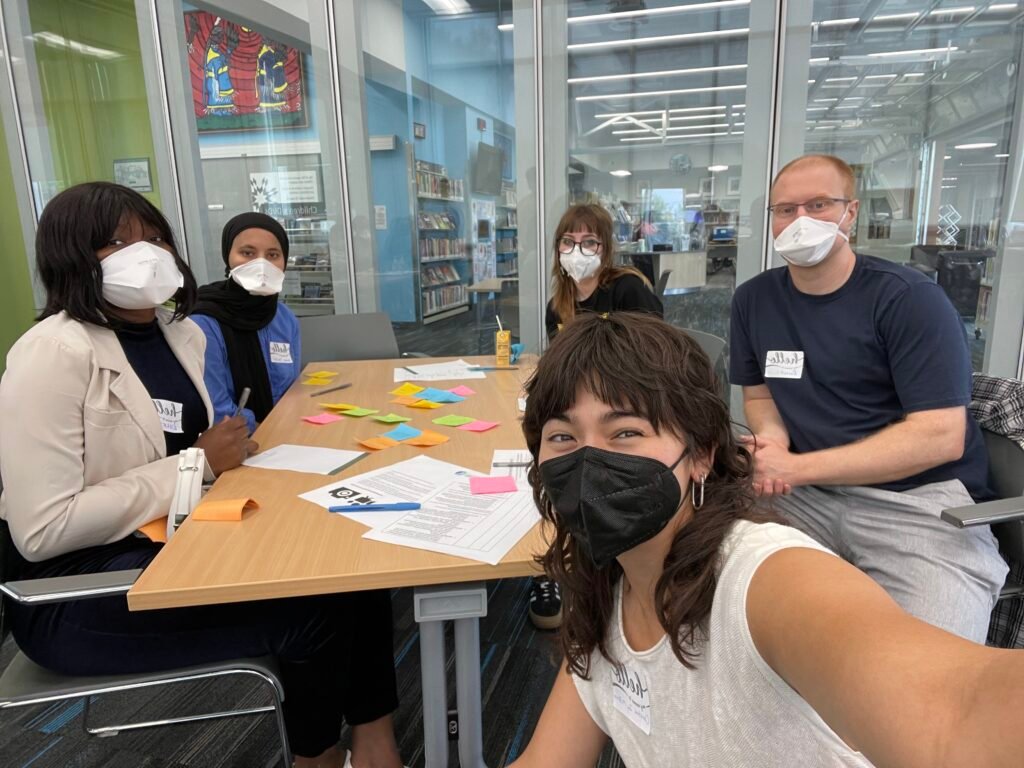
Round 1: Values and Issues
Round 1 conversations focused on each person and/or organization’s values. Participants shared their concerns and hopes for the future of Regina. Then the conversation turned to how climate change has impacted people and communities. Finally, there was an exploration of the connection between climate change impacts and the key social and economic issues that participants care about.
At the end of Round 1, each participant wrote down what they think the most important climate justice issues Regina faces on Post-it notes. Each table grouped these notes according to common themes. Issues included but were not limited to:
“A measure of wealth is how much you’re able to share with others”
SOLUTION: Learning from Indigenous ways of life
Identified Issues:
- Housing Security availability DENSITY
- Truth and reconciliation
- Climate change impacts on Indigenous ways of life
- Access to green spaces
- Access to health care
- Costs of living (heating and/or cooling and food costs)
- Urban design leading to inequality
- Housing unaffordability
- Extreme weather events and their impact on the most vulnerable
- Petro-masculinity and homophobia
- Climate change, homelessness and inequality impacting mental health
- Accessible public and active transportation
- Public transit safety
- Homelessness and the need for cool and/or warm and/or safe places to live
- Racism impacting access to services and infrastructure
- Poor air quality
Round 2: Intersections
Round 2 explored how attendees’ values and concerns intersect. Each table put their Post-it notes (grouped by theme) on chart paper and drew visual representations of the intersection and/or connections between the themes. At the end of this inspiring and insightful exercise, a representative of each table explained their findings to the larger group and then participants did a gallery walk to other tables – leaving comments on others’ visualizations. After that, Abhay Sachal led a group discussion to synthesize the main themes and findings.
Intersections between climate and social and economic issues identified in Round 2 included:
- Housing is a human right
- The negative impact of sprawl
- The negative impact of grocery store monopolies
- The need for circularity in the economy
- Lack of mental health supports
- Better built physical and social infrastructure to address homelessness, climate change and inequality
- Inequality impacting accessibility to transportation and housing
- Police violence
- The need for community care
- Lack of political representation for equity-seeking people
- A lack of political will on the part of decision-makers
- The need for solidarity among impacted groups
- Capitalist ideology and racism creating inequality
- Colonial systemic structures inhibiting positive change
- The need for a seven generations concept for decision-making
- The need for an equity lens when making decisions
- The need to recognize intergenerational trauma and its impacts
At the end of Round 2, a group discussion synthesizing themes and findings identified that addressing affordability and accessibility, and more accountability from governments are necessary to build a better city. Importantly, recognition of Indigenous knowledge and rights is fundamental to creating a sustainable and inclusive Regina.
Round 3: Actions
In Round 3, participants quickly brainstormed community assets and potential actions people could take to create positive change.
Suggested actions included:
- Supporting existing coalitions in Regina working on transit and homelessness
- Meeting with policy-makers
- Working to elect a more progressive council in Regina in the fall
- More organizing skills training for advocates
- Continuing to build connection and power through community conversations
Participants highlighted how certain supports such as funding for coalition-building and community events, opportunities to hold city council accountable and more youth involvement in climate action are needed.
The dialogue ended with a thank you from co-organizer Sydney Taylor.
Program Photos
This Program Is Sponsored By: