
Regina Youth Climate Dialogue – 2025
Break the Divide and the David Suzuki Foundation brought together diverse youth (ages 25 and under) to connect, reflect on the emotional impact of climate change and move toward climate justice action.
The intention was to diversify the climate justice movement in Regina, create space for voices not often heard in climate change conversations and bring together groups of youth with different experiences to establish shared values and common goals.
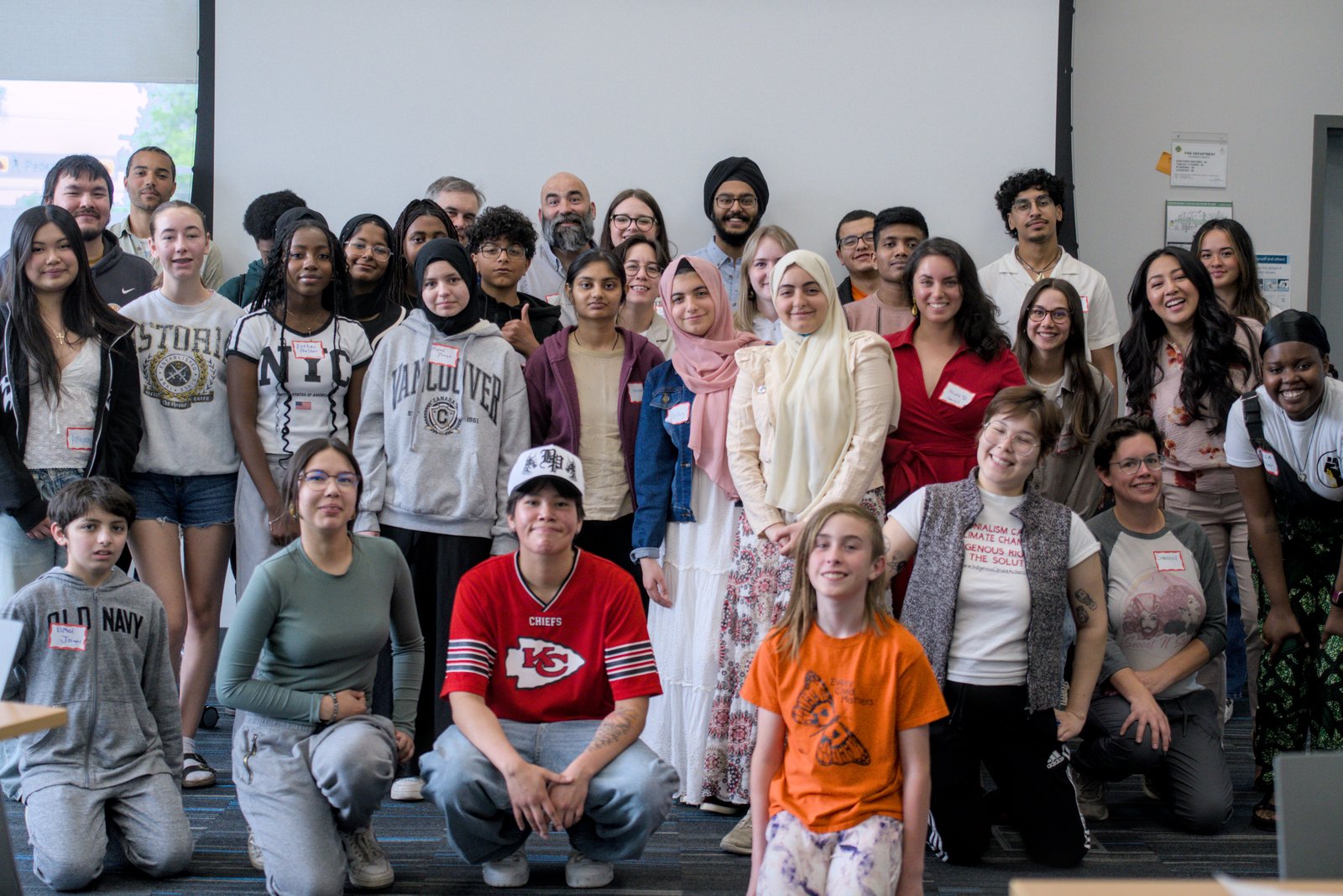
On June 6 and 7, 2025, Break the Divide and the David Suzuki Foundation ran a two-day dialogue that brought together diverse youth (25 and under) to connect, reflect on the emotional impact of climate change and move toward climate justice action.
A priority for the event was to ensure diverse participation, particularly from equity-seeking and BIPOC communities. The intention was to diversify the climate justice movement in Regina, create space for voices not often heard in climate change conversations and bring together groups of youth with different experiences to establish shared values and common goals. Twenty-nine diverse youth attended the event.
“I love the dialogue! I thought it went really well, especially with youth expressing their emotions about how they feel and being heard.”
Youth Climate Dialogue Objectives
- Empower youth to explore their emotions and envision the future they want
- Build community and collective power in youth through meaningful dialogue
- Spark organizing efforts around climate justice in Regina
- Collect data on youth perspectives in Regina to support the necessary expansion of school-based climate dialogue programs in Regina
Program Video
Day 1
The purpose of Day 1 was to foster safety, trust and community between participants. The day began with get-to-know-you icebreakers and a land acknowledgement that reflected on the history of the traditional territories of the Cree, Saulteaux, Dakota, Nakota and Lakota, and the homeland of the Métis/Michif Nation, connection to the land and our shared responsibility to care for it.
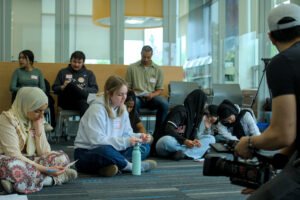
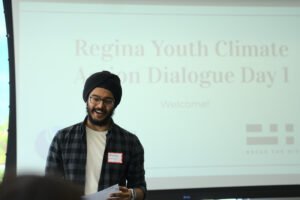
The participants then established rules of accountable space to create a safe space to share emotions and ideas and connect. The participants then stepped into two climate emotions circles led by facilitator Abhay Singh Sachal from Break the Divide, Russell Charlton from Eco Stress Sask, Katie Wilson, formerly of Indigenous Climate Action and Mother Earth Justice Advocates, and Nicole Doray from the David Suzuki Foundation. Within these circles, they shared experiences and concerns and discussed local problems.
Facilitator Katie Wilson then performed a smudging, and participants returned to their circles where they named their emotions using a colour wheel. The two groups reunited to establish common emotions and values for all participating. Common emotions included a sense of “stuckness,” outrage, sadness and depression.
“With the wrong happening in our world today, you can feel alone with all these thoughts and worries. But when I realized that I wasn’t alone from all the people sharing their own thoughts and opinions, it felt so nice and comforting.”
Day 2
Day 2 was designed to turn vulnerability into possibility. The day started with a quick get-to-know-you exercise, a land acknowledgment from Katie Wilson and a review of the rules for accountable/safe spaces for sharing and connecting. Then the participants were reminded of the emotions and values they had shared the day before.
This was followed by a presentation on climate justice — how social, economic and environmental issues intersect — from the David Suzuki Foundation’s Cameron Esler. Katie Wilson also presented on Indigenous knowledge and two-eyed seeing.
To build on the participants’ understanding of climate justice, we held a panel discussion where youth could ask experts questions. The panel featured Katie Wilson, prof. Vanessa Mathews (an expert on urban geography) and prof. Andrews Stevens (an expert on just transition and a former city councillor). Participants asked questions regarding how they could improve their community, city and province.
The participants learned about:
- Food security issues
- Benefits of accessible public transportation and active transport
- How houselessness and the need for more affordable housing are related to climate change
- Health impacts of climate change
- The concept of “land back” and Indigenous ways of knowing and how they can make our communities sustainable
- How youth voices can move decision-makers to take action
Goals identified as important:
- Supporting the houseless downtown
- Building more homes in Regina
- Creating community gardens for increased food security
- Reducing consumption of toxic plastic
- Moving the provincial government to reduce greenhouse gas emissions
Then participants embraced the opportunity to envision a better world via a fun goal-setting exercise led by Nicole Doray. This exercise helped them see that their visions of a better community, city and province are realistic.
We then held table discussions to create action plans for achieving these goals. Local activists from grassroots social justice groups — Jessica Smith from Regina Energy Transition, Mwila Munganama from Black in Sask, Thabo Mthembu from the Good Trouble Network, Amanda de la Cruz from YQR BIPOC Queer Group and Shawn Koch from the Hawk Principle — facilitated these discussions and offered insights into how participants could achieve their goals and how to ensure their goals achieved more economic and social justice.
Day 2 ended with reflections on these goals and actions plans. Participants were provided with the tools and resources they needed to move forward. Two participants, Joseph Klyne and Sienna Maiya Peterson, ended the day with inspiring testimonies from their two-day experience. According to Joseph and Sienna, young people are emotionally overwhelmed, and they need to acknowledge these emotions, connect with others and work together, as there is hope in action.
Following the dialogue, participants were invited to take part in a year-long climate justice action cohort supported by Break the Divide and the David Suzuki Foundation.
Program Photos
This Program Is Sponsored By: